Those of you who are concerned with the environment know that Earth Day, a day to celebrate environmentalism and efforts to reduce pollution across the planet, occurs this week on April 22, 2026.
The event is celebrated at numerous locations across the world, typically with a central theme addressing important issues. This year's theme is "Our Power, Our Planet," and deals with climate change solutions, renewable energy, etc.
But, for those of you not old enough to remember (or those of you so old that you forgot), did you know that were it not for an environmental disaster off of the California coast, Earth Day (and the modern environmental movement) might not have ever happened?
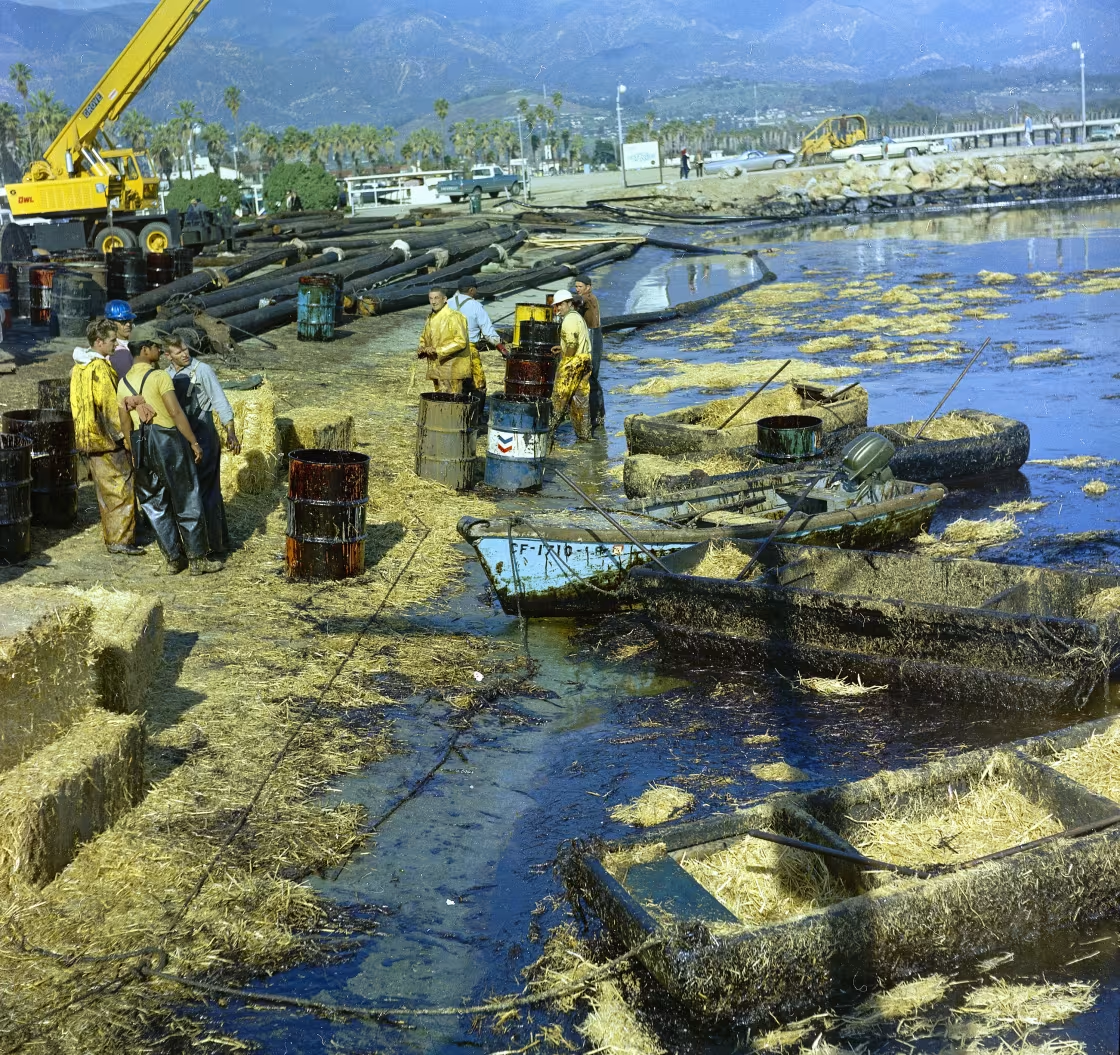
On January 28, 1969, the Santa Barbara oil spill occurred. It was a massive release of crude oil into the Pacific Ocean that shocked the world with its negative effects.
With the assistance of Google's Gemini AI, we give you a summary of the events that occurred and how Earth Day came to being as a result. Please note - if you were alive then, please give us a summary of your memories in the comments below.
The Disaster (January 28, 1969)
The crisis began five miles off the coast of Summerland, California, on Union Oil's Platform A. During the drilling of a fifth well, a massive "blowout" occurred. When workers attempted to cap the well, the resulting pressure caused the seafloor itself to crack, spewing oil and natural gas from multiple fissures.
- Magnitude: An estimated 3 to 4 million gallons of crude oil escaped into the Santa Barbara Channel.
- Environmental Toll: The spill created an 800-square-mile slick that coated 35 miles of coastline. It killed approximately 3,500 sea birds and numerous marine mammals, including dolphins, seals, and sea lions.
- Visual Impact: For the first time, the devastation of an industrial disaster was broadcast in color into American living rooms, showing heartbreaking images of oil-soaked birds and blackened beaches.
The Connection to Earth Day
The disaster transformed environmentalism from a niche local concern into a national priority.
- Senator Gaylord Nelson's Inspiration: Shortly after the spill, Senator Gaylord Nelson of Wisconsin flew over the Santa Barbara Channel. Seeing the massive oil slick from the air and witnessing the public's outrage, he was inspired to channel that energy into a "national teach-in on the environment."
- The First Earth Day: On April 22, 1970, just 15 months after the spill, an estimated 20 million Americans (10% of the population at the time) participated in the first Earth Day.
- Policy Shift: The spill "touched the conscience of the American people," as President Nixon noted during a visit. This collective shift in public opinion led to a wave of landmark legislation, including:
- The National Environmental Policy Act (NEPA)
- The creation of the Environmental Protection Agency (EPA)
- The Clean Water Act and the Endangered Species Act
Lasting Legacy
Today, the Santa Barbara spill remains the third-largest oil spill in U.S. waters, surpassed only by the Deepwater Horizon (2010) and the Exxon Valdez (1989). Locally, it led to the formation of the first Environmental Studies department in the country at UC Santa Barbara and the activist group Get Oil Out! (GOO!).

