Cookies Notice

This site uses cookies from Google to deliver its services, to personalize ads, and to analyze traffic. Information about your use of this site is shared with Google. By using this site, you agree to its use of cookies.

Wednesday, April 22, 2026

Today is Earth Day. Here is a list of events throughout California.

Our apologies for not publishing this earlier, but, Earth Day is today and many of you may not be aware of some of the events scheduled throughout the state to celebrate it. 


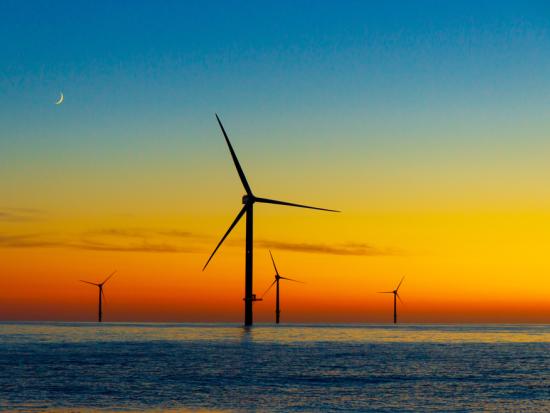
Photo Credit: TheOriginalSoni

Although several communities have already had events prior to today (and some will continue to have events throughout the month, e.g., CSUB's Sustainability Symposium on Friday, April 24, below is a list of events throughout the state.

Please let us know in the comments below if any of the info is incorrect or if you know of other events that we may have missed!

California Earth Day Events for April 22, 2026:

  • Earth Day Conversation on Creativity (San Francisco)
    • Venue: 1 Hotel San Francisco, 8 Mission St, San Francisco, CA 94105.
    • Time: 6:00 PM – 7:30 PM.
    • Accuracy Note: This eco-chic hotel on the Embarcadero is the correct venue for Laura L. Rubin’s book launch.
  • Earth Day Hike at Anthony Chabot (Castro Valley)
    • Venue: Anthony Chabot Regional Park, 17930 Lake Chabot Rd, Castro Valley, CA 94546.
    • Time: 9:30 AM – 12:30 PM.
    • Accuracy Note: This is part of the East Bay Regional Park District’s official Earth Day programming.
  • "Everyday is Earth Day!" Cleanup (San Jose)
    • Venue: Happy Hollow Park & Zoo, 748 Story Rd, San Jose, CA 95112.
    • Time: 9:00 AM – 12:00 PM (Check-in starts at 8:30 AM at the "Trash Punx" tent).
    • Accuracy Note: This event is held in the zoo's East Lot off the Story Road entrance.
  • Earth Day Event: Fuller Park (Napa)
    • Venue: Napa Bookmine, 1625 2nd St, Napa, CA 94559.
    • Time: 6:00 PM – 7:00 PM.
    • Accuracy Note: While the book is about Fuller Park, the event itself is hosted at the bookstore.
  • Morro Bay Earth Day Cleanup (Morro Bay)
    • Venue: Centennial Parkway (near the giant chessboard), 101 Coleman Dr, Morro Bay, CA 93442.
    • Time: 3:30 PM – 5:30 PM.
    • Accuracy Note: Hosted by the Morro Bay National Estuary Program; check-in is right on the Embarcadero.
  • Bees and Seas Presentation (Dana Point)
    • Venue: Hennessey's Tavern, 34111 La Plaza, Dana Point, CA 92629.
    • Time: 6:30 PM.
    • Accuracy Note: This presentation by Sea Drinks is confirmed for this location today.
  • CSUB Earth Day Movie Night: The Lorax
    • Venue: CSUB Student Union, 9001 Stockdale Hwy, Bakersfield, CA 93311.
    • Time: 5:00 PM tonight.
In addition, you might be interested in the visiting the following establishments and receive some discounts on purchases:
 
  • Good Pantry Earth Day Special
    • Venue: Good Pantry, 1141 First St, Napa, CA 94559.
    • Offer: Enjoy 10% off any items filled in a reusable container today.
  • Apple Core Project
    • Venue: 612 Grace St, Bakersfield, CA 93305.
    • Details: They focus on local food distribution and community gardening in Old Town Kern.
  • Active Culture
    • Details: They are offering a 20% off coupon today for customers who bring in reusable items.

The above information was developed with the assistance of Google's Gemini AI. Again, if any of the info is incorrect, let us know in the comments below.

    Monday, April 20, 2026

    The California Environmental Disaster that led to Earth Day

    Those of you who are concerned with the environment know that Earth Day, a day to celebrate environmentalism and efforts to reduce pollution across the planet, occurs this week on April 22, 2026.

    The event is celebrated at numerous locations across the world, typically with a central theme addressing important issues. This year's theme is "Our Power, Our Planet," and deals with climate change solutions, renewable energy, etc.

    But, for those of you not old enough to remember (or those of you so old that you forgot), did you know that were it not for an environmental disaster off of the California coast, Earth Day (and the modern environmental movement) might not have ever happened?

    Photo Credit: AP file via NBC News, Fair Use

    On January 28, 1969, the Santa Barbara oil spill occurred. It was a massive release of crude oil into the Pacific Ocean that shocked the world with its negative effects.

    With the assistance of Google's Gemini AI, we give you a summary of the events that occurred and how Earth Day came to being as a result. Please note - if you were alive then, please give us a summary of your memories in the comments below.

    The Disaster (January 28, 1969)

    The crisis began five miles off the coast of Summerland, California, on Union Oil's Platform A. During the drilling of a fifth well, a massive "blowout" occurred. When workers attempted to cap the well, the resulting pressure caused the seafloor itself to crack, spewing oil and natural gas from multiple fissures.  

    • Magnitude: An estimated 3 to 4 million gallons of crude oil escaped into the Santa Barbara Channel.  
    • Environmental Toll: The spill created an 800-square-mile slick that coated 35 miles of coastline. It killed approximately 3,500 sea birds and numerous marine mammals, including dolphins, seals, and sea lions.  
    • Visual Impact: For the first time, the devastation of an industrial disaster was broadcast in color into American living rooms, showing heartbreaking images of oil-soaked birds and blackened beaches.  

    The Connection to Earth Day

    The disaster transformed environmentalism from a niche local concern into a national priority.  

    • Senator Gaylord Nelson's Inspiration: Shortly after the spill, Senator Gaylord Nelson of Wisconsin flew over the Santa Barbara Channel. Seeing the massive oil slick from the air and witnessing the public's outrage, he was inspired to channel that energy into a "national teach-in on the environment."  
    • The First Earth Day: On April 22, 1970, just 15 months after the spill, an estimated 20 million Americans (10% of the population at the time) participated in the first Earth Day.  
    • Policy Shift: The spill "touched the conscience of the American people," as President Nixon noted during a visit. This collective shift in public opinion led to a wave of landmark legislation, including:  
      • The National Environmental Policy Act (NEPA)  
      • The creation of the Environmental Protection Agency (EPA)
      • The Clean Water Act and the Endangered Species Act  

    Lasting Legacy

    Today, the Santa Barbara spill remains the third-largest oil spill in U.S. waters, surpassed only by the Deepwater Horizon (2010) and the Exxon Valdez (1989). Locally, it led to the formation of the first Environmental Studies department in the country at UC Santa Barbara and the activist group Get Oil Out! (GOO!).  


    Tuesday, April 7, 2026

    Free Bulky Waste Drop-Off Event in Bakersfield on April 11, 2026

    Do you have some bulky materials you need to get rid of or just don't need anymore? Well, the city of Bakersfield is hosting a Bulky Item Drop-Off event this Saturday, April 11, 2026, from 8 a.m. to noon. The location is 15050 Stockdale Highway (near the end of the Westside Parkway). 


    The event is free but, there are some limitations, such as no hazardous waste, no commercial waste, no liquid waste, nothing over 300 lbs, etc.

    For a list of items accepted and not accepted:

    Accepted Items/Not Accepted Items

    And here is the same list for our Spanish speaking friends: 

    Ejemplos de Artículos Aceptables / No Aceptables


    Friday, March 13, 2026

    Public Workshop: California Corporate Greenhouse Gas Reporting

    As most environmental professionals in California know, the state recently passed new legislation that imposes new greenhouse gas (GHG) emission reporting requirements.


    The California Air Resources Board (CARB) will hold a virtual public workshop on March 23, 2026, to provide an update on additional information related to the Scope 1 and Scope 2 emissions reporting deadline of August 10, 2026.

    Additionally, the workshop will discuss the next stage of regulatory development including a summary of GHG reporting requirements for 2027-2030 and preliminary options for Scope 3 reporting requirements.

    CARB staff will be seeking input on alternative approaches as well as a discussion of CARB's approach to economic analysis.

    To register for the virtual workshop, which will be held on March 23, 2026, from 1 PM to 4 PM PDT, click on this link: 

    Corporate GHG Reporting Workshop Registration

    For more information about these reporting and financial requirements, click on this link: More Information

    Finally, if you are a corporate environmental professional or consultant involved with these reporting requirements, please let us know how difficult (or easy) complying with these requirements will be in the comments section below.

    Monday, March 9, 2026

    The Impact of Trump's Recision of the Endangerment Finding for Greenhouse Gases on California's Air Pollution Regulations

    California is facing a complex and new legal battle over the regulation of CO2 emissions and greenhouse gases. As a result, previous federal approvals for California to have stricter regulations may be disallowed. 


    Photo Credit: California Air Resources Board (ARB)

    The Trump administration recently rescinded the Endangerment Finding - something that the United States Environmental Protection Agency (EPA) previously made that showed - on a legal and scientific basis - that carbon dioxide (CO2) and other greenhouse gases were a danger to public health. This new move is one of the more significant changes in environmental policy that the United States government has ever made.

    So how does this affect California?

    1. EPA previously granted federal "waivers" to California to allow it to set air quality standards more stringent than federal ones. By removing the endangerment finding, EPA now can argue that California has no legal need or authority to regulate CO2 to protect its citizens.

    2. California's existing laws remain in place, however, their enforceability may no longer exist should EPA's removal of the endangerment finding survive legal challenges. As a result, the requirements in California laws like AB32 (The Global Warming Solutions Act) may not be allowed.

    For example. one such requirement that may not be allowed is California's mandate that all new cars sold in the state be zero-emission vehicles by 2035.

    3. The endangerment finding repeal also raises questions as to the legal basis for limits on stationary sources such as power plants and other industries. Certain industry groups may now sue, arguing that state rules are now preempted by federal regulations.

    4. All of the above moves environmental regulation into the courtroom, for an undetermined amount of time. California is preparing a legal challenge that the endangerment repeal ignores years and years of proven climate science and legal decisions.

    5. Businesses will now face years of uncertainty - do they need to follow federal regulations or California regualtions while they wait for what could be years for a final legal determination to be made?

    6. California may attempt to reclassify CO2 under state health codes/laws, thereby bypassing federal regulations. Even if California does that, such a move would surely be challenged by the current federal adminstration.

    What do you think about this? Please leave your comments, pro or con, below.

    Thursday, February 12, 2026

    Trump ignores science and uses a shaky legal argument to repeal EPA's previous greenhouse gas regulations

    Today, despite overwhelming scientific evidence to the contrary and the objections of many, President Donald Trump's EPA finalized a rule that repeals the agency's previous decision that greenhouse gases endangered public health and welfare. By doing so, Trump reverses actions the EPA has taken to regulate the emissions of such pollutants.


    As a result of this ruling, Trump's EPA can argue that it no longer has the legal authority to regulate greenhouse gases and the resultant global warming/climate change impacts they have. Additionally, EPA will now finalize the repeal of existing regulations that required strict tailpipe emission standards for cars and light trucks. 

    The decision is destined to be challenged by numerous groups, however, using some of the following arguments:

    1. The ruling is arbitrary and capricious under the Administrative Procedure Act.

    2. Previous U.S. Supreme Court precedent (Massachusetts v. EPA, 2007) established that greenhouse gases are air pollutants subject to regulation by the EPA if they are found to endanger public health.

    3. Today's decision is based on a shaky legal argument that ignores existing climate science that should result in challenges by experts in the field.

    4. A slim possibility exists that Congress could develop a new law specifically directing EPA to regulate greenhouse gas emissions. However, this will be practically impossible as long as Trump remains in power and his supporters maintain majorities in the House and Senate.

    Tuesday, February 10, 2026

    The Day the Earth Caught Fire - a prescient vision from 65 years ago?

    This a bit different from our usual posts. We recently watched an old British sci-fi film that has a strikingly familiar relationship to the world today.

    Here's a synposis. Please comment if you agree or disagree that many of the points in this film are similar to what is happening to our world today, both environmentally and politically.


    Movie Poster Credit: IMDB, Fair Use

    Released in 1961, The Day the Earth Caught Fire is a classic British science-fiction disaster film that manages to feel both like a vintage Cold War relic and a startlingly modern cautionary tale.

    Movie Summary

    The story is told through the eyes of Peter Stenning, a cynical, hard-drinking journalist for the Daily Express in London. After the United States and the Soviet Union simultaneously detonate massive nuclear bombs, the world begins to experience freakish weather: monsoons in the desert, massive fogs, and a relentless, skyrocketing heatwave.

    Stenning and his colleague Bill Maguire discover a terrifying truth the government is trying to suppress: the dual explosions were so powerful they knocked the Earth 11 degrees off its axis and altered its orbit, sending the planet spiraling toward the Sun. As London withers under a "heat mist" and water rationing leads to riots, scientists prepare a last-ditch effort to "kick" the Earth back into orbit with more nuclear detonations. The film ends on a famously ambiguous note, showing two prepared newspaper headlines: "World Saved" and "World Doomed," while the sound of church bells (in the US version) or silence (in the original) leaves the outcome to the viewer’s imagination.


    Comparison to Modern Climate Change

    While the film’s "nuclear-induced orbit shift" is scientifically impossible, its depiction of a planet in environmental freefall resonates deeply with today's climate crisis.

    • Human-Caused Catastrophe: Both the film and modern climate change share the central theme of anthropogenic (human-caused) disaster. In 1961, the fear was that our technology (nuclear weapons) would destroy us instantly; today, the fear is that our technology (fossil fuel reliance) is destroying us gradually.
    • The "Slow Burn" of Panic: The movie masterfully depicts the transition from "it’s just a weird summer" to "the world is ending." This mirrors the current global experience, where what was once dismissed as "unusual weather" is increasingly recognized as a systemic, existential threat.
    • Government Obfuscation: A major plot point involves the British government downplaying the severity of the crisis to prevent panic. This echoes modern frustrations regarding political "greenwashing" or the slow pace of governmental response to climate data.
    • Social Breakdown and Resource Scarcity: The scenes of water rationing, dried-up rivers (like the Thames in the film), and social unrest are no longer just sci-fi tropes but are mirrored in real-world droughts and climate-driven migration today.
    • The "Technological Fix": The film concludes with the hope that the very thing that caused the problem (nuclear bombs) can solve it. This parallels modern debates over geoengineering—the idea that we might use large-scale technological interventions to "fix" the atmosphere we’ve damaged.

    "Perhaps in the next few hours, there will be no remembrance of the past, and no hope for the future... All the works of Man will be consumed in the great fire out of which he was created." — The Day the Earth Caught Fire

    It’s a haunting film that definitely sticks with you—especially that final shot of the two conflicting newspaper headlines. It’s rare for a 60-year-old movie to feel more relevant today than it did upon its release.

    Here's a link to the original movie trailer: The Day the Earth Caught Fire

    Our thanks to Google's Gemini for its asistance in summarizing the above.


    Friday, February 6, 2026

    See an air pollution problem in California? Here is who to call.

    Have you ever wondered who to call if you notice a disturbing air pollution problem? No matter where you live in California, here is a list of every air pollution control agency in the state.


    Photo Credit: Cal EPA

    California has a total of 35 local air districts which are generally responsible for regional planning, monitoring, and permitting of stationary sources. These districts are overseen at the state level by the California Air Resources Board (CARB), which also oversees mobile source air pollution. Additionally, the federal Environmental Protection Agency (EPA) oversees federal aspects of pollution control. California is part of EPA's Region IX.

    Below is the complete list of California's air pollution control agencies and their official websites.

    California Air Pollution Control Districts (APCD/AQMD)

    Air DistrictOfficial Website
    Amador County APCDamadorair.org
    Antelope Valley AQMDavaqmd.ca.gov
    Bay Area AQMDbaaqmd.gov
    Butte County AQMDbutteairquality.com
    Calaveras County APCDcalaverasgov.us
    Colusa County APCDcountyofcolusa.org
    Eastern Kern APCDkernair.org
    El Dorado County AQMDedcgov.us/airqualitymanagement
    Feather River AQMDfraqmd.org
    Glenn County APCDcountyofglenn.net
    Great Basin Unified APCDgbuapcd.org
    Imperial County APCDapcd.imperialcounty.org
    Lake County AQMDlcaqmd.net
    Lassen County APCDlassencounty.org
    Mariposa County APCDmariposacounty.org
    Mendocino County AQMDmendoair.org
    Modoc County APCDmodoccounty.us
    Mojave Desert AQMDmdaqmd.ca.gov
    Monterey Bay Air Resources Districtmbard.org
    North Coast Unified AQMDncuaqmd.org
    Northern Sierra AQMDmyairdistrict.com
    Northern Sonoma County APCDnosonomaair.org
    Placer County APCDplacerair.org
    Sacramento Metropolitan AQMDairquality.org
    San Diego County APCDsdapcd.org
    San Joaquin Valley APCDvalleyair.org
    San Luis Obispo County APCDslocleanair.org
    Santa Barbara County APCDourair.org
    Shasta County AQMDshastacounty.gov
    Siskiyou County APCDco.siskiyou.ca.us
    South Coast AQMDaqmd.gov
    Tehama County APCDtehcoapcd.net
    Tuolumne County APCDtuolumnecounty.ca.gov
    Ventura County APCDvcapcd.org
    Yolo-Solano AQMDysaqmd.org