Cookies Notice

This site uses cookies from Google to deliver its services, to personalize ads, and to analyze traffic. Information about your use of this site is shared with Google. By using this site, you agree to its use of cookies.
Showing posts with label #ARB. Show all posts

Monday, March 9, 2026

The Impact of Trump's Recision of the Endangerment Finding for Greenhouse Gases on California's Air Pollution Regulations

California is facing a complex and new legal battle over the regulation of CO2 emissions and greenhouse gases. As a result, previous federal approvals for California to have stricter regulations may be disallowed. 


Photo Credit: California Air Resources Board (ARB)

The Trump administration recently rescinded the Endangerment Finding - something that the United States Environmental Protection Agency (EPA) previously made that showed - on a legal and scientific basis - that carbon dioxide (CO2) and other greenhouse gases were a danger to public health. This new move is one of the more significant changes in environmental policy that the United States government has ever made.

So how does this affect California?

1. EPA previously granted federal "waivers" to California to allow it to set air quality standards more stringent than federal ones. By removing the endangerment finding, EPA now can argue that California has no legal need or authority to regulate CO2 to protect its citizens.

2. California's existing laws remain in place, however, their enforceability may no longer exist should EPA's removal of the endangerment finding survive legal challenges. As a result, the requirements in California laws like AB32 (The Global Warming Solutions Act) may not be allowed.

For example. one such requirement that may not be allowed is California's mandate that all new cars sold in the state be zero-emission vehicles by 2035.

3. The endangerment finding repeal also raises questions as to the legal basis for limits on stationary sources such as power plants and other industries. Certain industry groups may now sue, arguing that state rules are now preempted by federal regulations.

4. All of the above moves environmental regulation into the courtroom, for an undetermined amount of time. California is preparing a legal challenge that the endangerment repeal ignores years and years of proven climate science and legal decisions.

5. Businesses will now face years of uncertainty - do they need to follow federal regulations or California regualtions while they wait for what could be years for a final legal determination to be made?

6. California may attempt to reclassify CO2 under state health codes/laws, thereby bypassing federal regulations. Even if California does that, such a move would surely be challenged by the current federal adminstration.

What do you think about this? Please leave your comments, pro or con, below.

Tuesday, December 9, 2025

New Public Meeting scheduled for CARB's GHG Reporting and Financial Risk Disclosure Initial Regulation

As we noted in a previous post, due to certain court decisions, the California Air Resources Board (CARB) had to delay implementing some of the requirements of recently adopted California regulations that pertain to greenhouse gas (GHG) emissions and the reporting of the financial risks associated with them by certain corporations operating in California. 

Photo Credit: CARB website

To address that, CARB has scheduled a new public meeting to consider adopting final reporting regulations for February 26, 2026, at 9:00 A.M., with a continuation to the next day if needed.

The public comment period will begin on December 26, 2025. Written comments may be submitted on or after that date with a deadline of February 9, 2026, representing a 45-day public comment period. (CARB is providing extra time for the public to review everything because of the holidays.)

An agenda for the meeting has not yet been posted as of today, however, it will be available at this link at least 10 days before the meeting: Public Agenda

The proposed final regulations were submitted to the California Office of Administrative Law (OAL) today, December 9, 2025. These and all of the rulemaking documents are available for review on CARB's website at this link: Rulemaking Documents 

Saturday, December 17, 2022

CARB Approves Unprecedented Climate Action Plan

The California Air Resources Board (CARB) just approved the unprecedented climate action plan that was described here in a previous article.

The next steps will require the adoption of specific rules and regulations to implement the plan, which aims to reduce fossil fuel emissions in the state to negligible levels by 2045.


Photo Credit: California Air Resources Board

So, what do you think? As I asked before, will it be successful or just a pipe dream? Ref: CARB approves unprecedented climate action plan to shift world’s 4th largest economy from fossil fuels to clean and renewable energy

More info at: Frank's Environment Space

Wednesday, November 16, 2022

California Proposes Drastic Fossil Fuel Reduction Climate Change Plan - Visionary or Naive Pipe Dream?

The California Air Resources Board (CARB) today released its 2022 Scoping Plan for Achieving Carbon Neutrality. The unprecedented plan, if enacted into law, presents the most drastic climate change proposal in the entire world. 


Photo Credit: California Air Resources Board

The major thrust of the plan is to nearly eliminate the use of fossil fuels anywhere in the state by 2045. This would assume a massive movement to electrify the transportation sector - cars, buses, trains, and trucks - which together are the largest single source of greenhouse gas (GHG) emissions in the state. It would also require the phasing out of how Californians heat their homes, elimination of certain chemicals and refrigerants, the expansion of power sources derived from wind, solar, hydrogen, and biomethane, and increased usage of Carbon Dioxide Capture and Sequestration (CCS). 

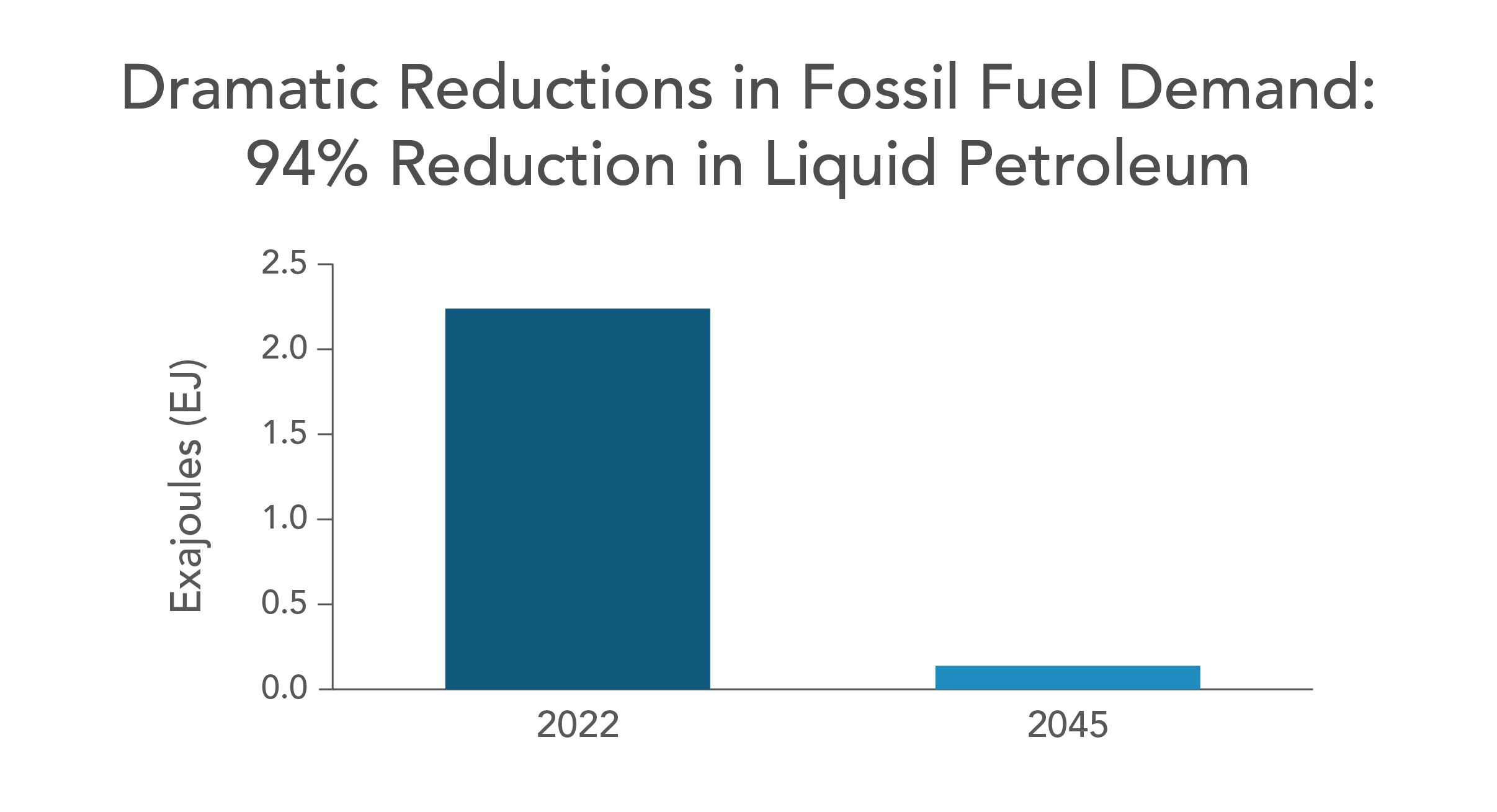
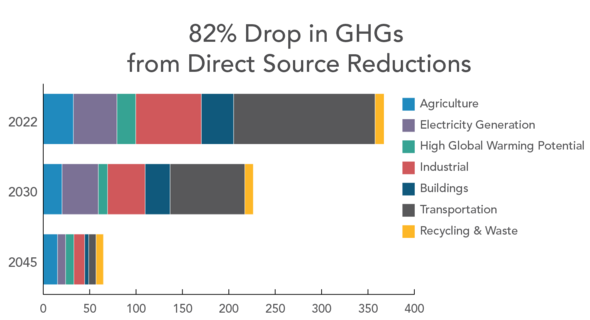
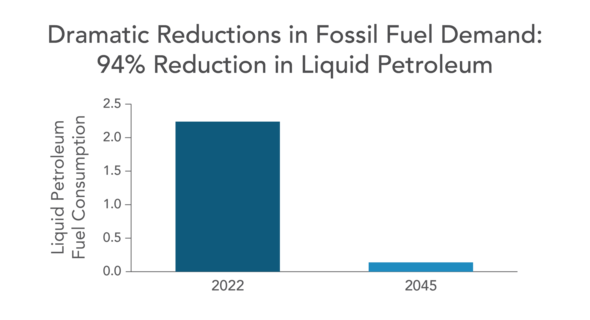
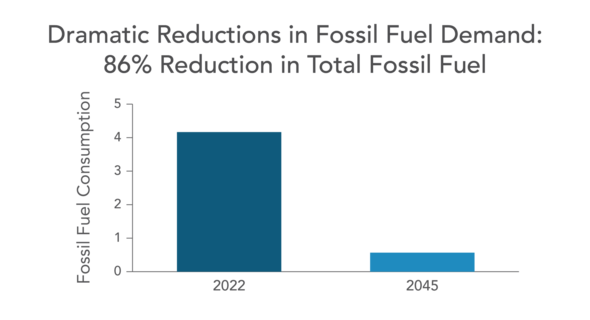
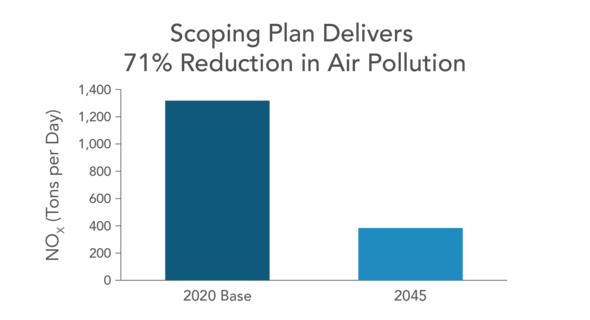
If successful, the plan would reduce total fossil fuel usage in the state by 86% and a reduction in petroleum liquids by 94%. In addition to reductions of GHGs, the proposal would also reduce total air pollutants by 71%.

CARB claims that its economic modeling for the proposal shows a net economic benefit to the state, resulting in an expansion of California's economy (currently the 5th largest economy in the world and soon to be the 4th largest) to $5.1 trillion by 2045 (from $3.2 trillion today) and an increase of at least 4 million new jobs. 

It will also save Californians $200 million in health care costs related to air pollution.

“California is drastically cutting our dependence on fossil fuels and cleaning our air – this plan is a comprehensive roadmap to achieve a pollution-free future,” said Governor Gavin Newsom. “It’s the most ambitious set of climate goals of any jurisdiction in the world, and if adopted, it’ll spur an economic transformation akin to the industrial revolution. While big polluters focus on increasing their profits at our expense, California is protecting communities, creating jobs and accelerating our transition to clean energy.”

Added CARB Chair Liane Randolph, "This plan delivers a massive reduction of climate-warming pollution, cutting it down to a fraction of what it is today. And by rapidly shifting away from all fossil fuels and then reaching carbon neutrality, the plan delivers public health benefits to everyone in California, most importantly to the communities suffering from persistent air pollution. This plan clearly and unequivocally presents challenging and ambitious goals, but we simply have no other choice but to meet them – and do it in less than a quarter century. We all have experienced firsthand the impacts of climate change, whether wildfires, drought, record-breaking heat waves and more. Failure is not an option. There is too much at stake and we need to move as fast and as far as we can to lessen the worst impacts of climate change and leave future generations a livable and healthy California.”

CARB's Board will vote on the new proposal at its December 15-16 meeting. The initial draft was reviewed by the Board in June and discussed with the Environmental Justice Advisory Committee (EJAC) in September. Changes requested by the Board, Governor Newsome, and the EJAC are included in the final proposal as well as requirements from new state laws passed by the state Legislature this year.

What do you think, is this proposal realistic given the proliferation of fossil fuel powered systems throughout the state and the world or is it a pipe dream based on a naive belief that other states and countries will do the same thing, particularly in those parts of the world whose governments are, shall we say, not as progressive as California?

Your comments are welcomed below.

Photo Credit: California Air Resources Board
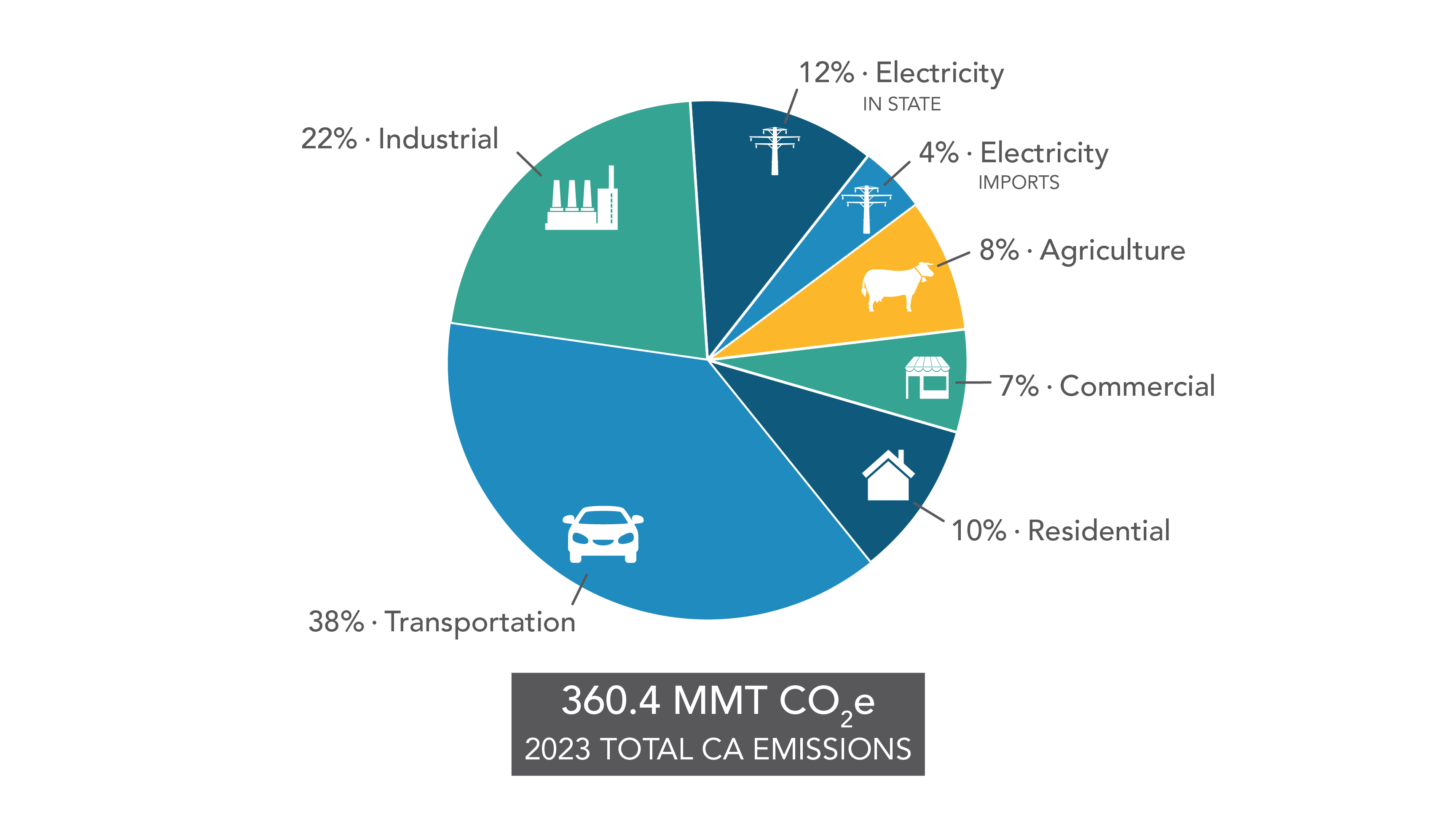

Photo Credit: California Air Resources Board


Photo Credit: California Air Resources Board