Cookies Notice

This site uses cookies from Google to deliver its services, to personalize ads, and to analyze traffic. Information about your use of this site is shared with Google. By using this site, you agree to its use of cookies.
Showing posts with label #SJVAPCD. Show all posts

Wednesday, July 1, 2026

Planning on setting off fireworks July 4th? Read this. before you do!

Another Fourth of July approaches and many of us will be going to fireworks displays and/or setting them off in our own backyards or neighborhoods.

Photo Credit: SJVAPCD

When most people think of the dangers of fireworks (if they bother to think of them at all), they may worry about setting wood shingled roofs on fire or hurting other people by burning them or exploding firecrackers too close to somebody.

But did you realize that July 4ths are typically one of the worst days of the year for air pollution, particularly for particulate matter (PM2.5)?

Local air pollution control district officials would like to remind everyone that fireworks release high levels of PM2.5, smoke, soot, ash, and toxic metals that can adversely affect public health as well as air quality.

These emissions can be especially harmful to children, older adults, and people with asthma or other respiratory illnesses, in addition to physical injuries, fires, excessive noise, and stress for pets and wildlife.

As shown by the above graph, air monitoring stations record very sharp PM2.5 increase spikes that are directly linked to fireworks activity, sometimes four to five times higher than federal health-based standards.

“As families gather to celebrate, we encourage Valley residents to do so responsibly and consider the impacts personal fireworks can have on air quality and public health,” said Jaime Holt, San Joaquin Valley Air Pollution Control District Chief Communications Officer. "Fireworks activity can lead to significant increases in particle pollution, affecting air quality throughout the Valley and making it difficult for some residents to breathe.”

The SJVAPCD has published a graphic that starkly shows the dangers of fireworks. It can be seen here: Impacts of Fireworks


Monday, June 29, 2026

SJ Valley residents - Is there an air pollution issue that concerns you? Let the SJVAPCD know!

This is directed toward residents of the San Joaquin Valley (the Valley), although it also applies to other California residents when their local air pollution control districts have similar meetings open to the public.

Photo Credit: SJVAPCD

Next month, the San Joaquin Valley Air Pollution Control District (the District) will be holding a virtual Permit Stakeholders Meeting on July 22nd at 1:30 PM. 

Now many people think such meetings only apply to businesses that require permits or are directly impacted by rules and regulations or consultants that work for those companies, however, residents of the Valley are considered to be permit stakeholders as well - their health, jobs, and environment are impacted by what the District does or does not do too!

So, if you have an air pollution concern that you don't think is being handled properly, or, if you simply want to learn more about what the District is doing and plans to do, then you need to register for this virtual meeting. It's free and open to the public.

The agenda for the meeting has yet to be made, but, if you have any topics that you would like the District to consider, then please send an email to Marissa Mak of the District at marissa.mak@valleyair.org.

By doing so, you will get the final agenda emailed to you along with a Zoom link a week prior to the meeting if you'd like to attend.

For further information, you may contact Ms. Mak at 661.392.5605 or check out the District's website at www.valleyair.org.


Friday, June 12, 2026

Warehouse fire in Tracy, CA, triggers Air Alert and Health Caution by SJVAPCD

The San Joaquin Valley Air District has issued an Air Alert and Health Caution today due to a structure fire at a warehouse in Tracy, California. According to news reports, the fire began yesterday around 1 PM and destroyed a massive medical supply facility owned by Medline. The fire then spread across the street to a Fed Ex warehouse storage yard and threatened other facilities nearby, including Home Depot, Amazon, and numerous other warehouses.

Here is a summary of the key details and safety recommendations from the press release:

Smoke Production and Movement

  • Current Status: Smoke from the fire is moving southward along the western portion of the San Joaquin Valley.
  • Overnight Forecast: Expect smoke to move eastward into the northern and central parts of the valley.
  • Affected Areas: Surface smoke impacts are possible across San Joaquin, Stanislaus, Merced, Madera, Fresno, Kings, Tulare, and the valley portion of Kern counties. The heaviest impacts will be in areas closest to the fire.

Health Risks & Precautionary Measures

If you can smell smoke or see ash, you are likely being affected by fine particulate matter pollution. To protect yourself, the District recommends:

  • Staying indoors as much as possible with windows and doors closed.
  • Using indoor air filtration systems to keep the air clean.
  • Sensitive Individuals: Children, older adults, and people with heart or lung conditions should take extra precautions and follow guidance from their medical professionals.

How to Stay Informed

  • Air Monitoring: Additional temporary air quality monitors have been set up in coordination with the San Joaquin County OES. Real-time data can be tracked at AirNow.gov.
  • Live Feed: A live camera near the fire location is available to view here.
  • Local Updates: The latest incident updates are being posted on the San Joaquin County Emergency Services page.
  • Mobile Tracking: Residents can download the Valley Air app to track local air quality across up to 10 saved locations.

Saturday, May 2, 2026

SJVAPCD releases Annual Report to the Community

The San Joaquin Valley Air Pollution Control District has just released its Annual Report to the Community and it is full of encouraging news to residents of the Valley. According to the report, the San Joaquin Valley showed record clean air improvements, marking 2025 as the cleanest year on record for numerous air quality parameters.

Photo Credit: SJVAPCD

For the first time, every air monitoring site in the District recorded PM2.5 readings below the federal 24-hour standard. Additionally, the District had the lowest number of exceedances of the ozone standard on record. 

As a result of the clean air efforts of the District, residents, businesses, public agencies, farmers, and community organizations, clean air improvements have resulted in more "Good" air quality days and a record low of only 5 "Unhealthy" days across all of the District's counties. As a point of reference, it was only ten years ago that the District experienced over 100 "Unhealthy" days and 20 years ago that the number exceeded 100 "Unhealthy" days - a remarkable improvement of the District's air quality.

According to Samir Sheikh, the District's Executive Director and Air Pollution Control Officer (APCO), "These improvements bring the Valley closer than ever to attaining the remaining federal health-based standards and represents real improvements in the air we breathe and tangible health benefits for the communities we serve."

Free printed copies can be ordered by emailing public.education@valleyair.org or calling (559) 230-6000.

Monday, December 22, 2025

SJVAPCD Healthy Air Living Kids’ 2026 Calendar now available for free

Every year the San Joaquin Valley Air Pollution Control District (SJVAPCD) asks student artists in grades K-12 to submit drawings with clean air themes for its Healthy Air Living Kids' Calendar Contest.

Photo Credit: SJVAPCD

The winners for next year's calendar have been selected and the 2026 calendar is now available for a free download here or by contacting the SJVAPCD at  public.education@valleyair.org

Entries for the 2027 contest may be submitted until September 26, 2026.

Tuesday, November 4, 2025

Wood burning restrictions now in effect for the San Joaquin Valley

It's that time of year again. The San Joaquin Valley Air Pollution Control District (the District) has reminded everyone that as of November 1st, restrictions on residential wood burning are now in effect until the end of February 2026.

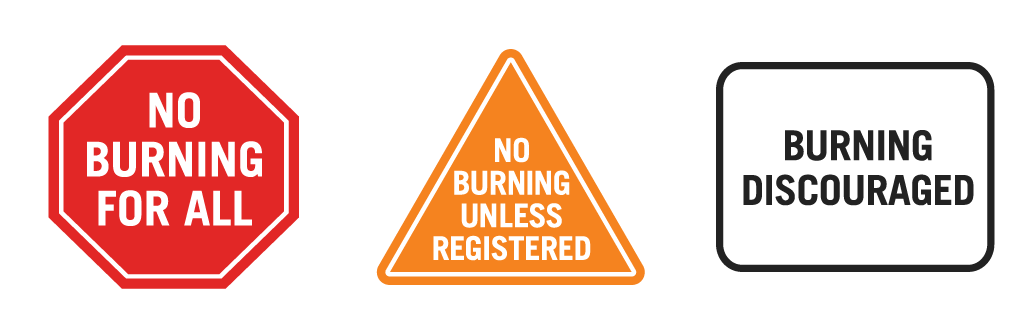
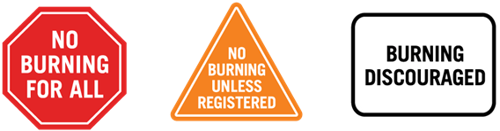
Although this is not a complete ban, residents are reminded that, depending upon air quality forecasts, residential wood burning will be either banned entirely (with specified exceptions), discouraged, or restricted to burning in registered devices only.

The reason for this policy is simple - to protect public health from the harmful emissions associated with wood burning, e.g., fine particulate air pollution referred to as PM2.5 (particulate matter with a particle size of 2.5 microns or less).

Daily burn forecasts can be found on the District's website, or by calling 1-800-SMOG INFO (1-800-766-4463), by downloading the free Valley Air app, or by signing up to receive daily burn status notifications by email.

According to Jaime Holt, the District's Chief Communications Officer, "Public health is at the heart of our mission. Every resident can make a real difference this winter by simply choosing not to burn wood. Limiting the use of fireplaces, woodstoves, and outdoor fire pits is one of the most effective ways to improve neighborhood air quality and protect community health."

Exempt from these restrictions are homes that have no other option than to burn wood for heat, burning natural gas, or burning propane gas. 

In addition, the District has a Fireplace and Woodstove Change-Out Program that provides up to $5000 for those who wish to convert their existing wood burning stoves or fireplaces with electric heat pumps or natural gas inserts.

Finally, if you own an EPA-certified wood and/or pellet-fueled device, you can use them on No Burning Unless Registered days by registering the devices with the District. 

Wednesday, November 29, 2023

Historic reductions in San Joaquin Valley Ag emissions noted by air agencies

A proclamation applauding the efforts of San Joaquin Valley farmers in cooperation with the San Joaquin Valley Air Pollution Control District (District), the National Resources Conservation Service (NRCS), the United States Environmental Protection Agency (USEPA), and the California Air Resources Board (CARB) to reduce agricultural air emissions throughout the Valley was issued today by representatives of all four agencies. 


Photo Credit: CARB

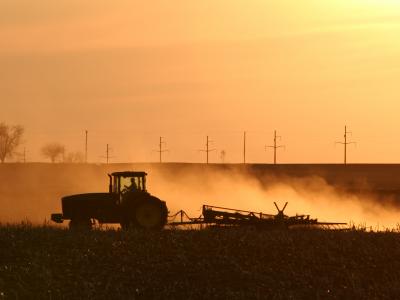
Through several different incentive programs, the Valley ag industry turned over and destroyed more than 12,800 pieces of older, high polluting agricultural equipment, including old tractors and other equipment, resulting in the reduction of over 11 tons per day of nitrogen oxide (NOx) emissions. NOx emissions are a key component of photochemical smog formation.

The reductions achieved are the equivalent of removing 1.5 million cars off of California roads.

According to Martha Guzman, USEPA's Regional Administrator for Region 9, “Emissions from agricultural equipment are the largest source of nitrogen oxide in the Valley and will require continued innovation and strategies for reducing air pollution – including via the $10 million grant for a low-dust nut harvester that we are announcing today.”

“The District applauds the leadership of local and state legislators, as well as Valley farmers in recognizing the public health and climate benefits provided throughout California from clean air investments,” stated Samir Sheikh, Executive Director/Air Pollution Control Officer for the Valley Air District. “The San Joaquin Valley agricultural sector feeds the world and coordinated multi-agency efforts like this must continue to support farmers’ ongoing transition to sustainable and air-friendly practices.”


For more information: Valley Agricultural Leads Nation in efforts to Improve Air Quality

Monday, October 31, 2022

San Joaquin Valley APCD Wood Smoke Reduction Program Begins November 1


The San Joaquin Valley Air Pollution Control District (the District) reminds residents that on November 1, 2022, its residential wood smoke reduction program begins. Before lighting your wood burning fireplace, please be sure to check with the District to see if ambient conditions allow for it to occur. Otherwise, you may be surprised by a knock on your door by a friendly District air pollution control enforcement inspector.

Photo Credit: San Joaquin Valley Air Pollution Control District

The annual program is in effect from November 1 until the end of the following February every year. Its purpose is to reduce the amount of harmful PM 2.5 particulate matter into the atmosphere from residential wood smoke. (PM 2.5 is particulate less than 2.5 microns in diameter.) Such particles are so small that they can reach deep into one's lungs and are difficult if not impossible for the lung's mucociliary system to remove.

The program does not apply to natural gas burning, propane, or in areas where natural gas isn't available and wood burning is the only source available for heat.

For more information, please call 1-800-SMOGINFO (1-800-766-4463) or click this link:

Residential Wood Smoke Reduction Program