Cookies Notice

This site uses cookies from Google to deliver its services, to personalize ads, and to analyze traffic. Information about your use of this site is shared with Google. By using this site, you agree to its use of cookies.
Showing posts with label #fossilfuels. Show all posts

Sunday, July 26, 2026

Should oil companies be sued for climate change damages?

Climate change or global warming, depending upon your preference, is real and due to human activities, primarily emissions from the combustion of fossil fuels. (If you disagree, don’t bother arguing here, try arguing with the climate change experts at Skeptical Science. They have a rebuttal for every argument you can come up with, backed up by peer-reviewed science.)


The San Ardo Oil Field

Photo Credit: Loco Steve from Orpington, UK, CC BY 2.0 <https://creativecommons.org/licenses/by/2.0>, via Wikimedia Commons

Regardless of whether you believe climate change is real or not, there have been several legal moves made to hold fossil fuel companies financially responsible for the damage caused by their products. Proponents say that the corporate polluters and producers of fossil fuels should be held financially accountable by legal court actions. Opponents say that climate policy belongs in legislatures and government rulemaking, not the courts.

Some of the arguments for and against legal action can be summarized as follows:

Pros:

Financial Accountability – This would shift the costs of dealing with climate change, for example building seawalls to protect against rising sea levels, from taxpayers to the corporations who profited from fossil fuels.

Corporate Deterrence – Deceptive marketing practices would be penalized and the financing of high-emission projects would be disincentivized.

Tobacco Precedent – Tobacco companies were successfully sued in the 1990s when internal documents were found that proved they knew the harm their product was causing. If fossil fuel companies have similar internal documents, similar lawsuits should follow.

Legal Discovery of Evidence -If lawsuits are filed, then court decisions may require the public disclosure of the aforementioned internal documents, revealing whether the companies purposefully employed disinformation campaigns about climate change.

Cons:

Separation of Powers – Those opposed to such lawsuits say that global climate policy should be set by elected lawmakers, not by unelected judges, especially if these companies were in compliance with all existing regulations that were in effect at the time.

Shared Responsibility – The fossil fuels in question were produced to meet global demand by consumers. Therefore, the consumption of these fuels due to this demand by society resulted in these problems. 

Economic Impacts on Industry and Society – The massive legal penalties that could result could bankrupt energy companies, cause consumer energy prices to rise dramatically, disrupt world-wide fuel supplies, and threaten jobs of those not only in the fossil fuel industry, but also in those industries that use and depend upon their products. 

Legal Causation Hurdles – It would be very difficult to prove that emissions from an individual company could be linked to specific climate events. 

Global ineffectiveness – Even if lawsuits were successful against private companies, they will not impact state-owned oil operations in other countries, which are very significant sources of the fuels that cause climate change. In other words, these lawsuits would not solve the global nature of these emissions. 

So, what do you think? Do you favor legal action against fossil fuel companies or do you prefer the legislative route, ensuring that sufficient regulations are developed to address this world-wide problem? Please let us know in the comments below.


Thursday, July 22, 2021

Will the world run out of Electric Vehicle (EV) batteries in 4 years?

Electric vehicles are seen as a key to reducing global CO2 emissions to positively impact adverse climate change effects from fossil fuels. Recent studies have shown that over an assumed vehicle lifetime, electric vehicles do have a smaller, cradle-to-grave overall environmental impact than traditional gasoline fueled vehicles. (Some of the assumptions used for vehicle life expectancy may be questionable - there isn't a lot of history of EVs operating for 100,000+ miles, for example - but, that's a discussion for another story!)
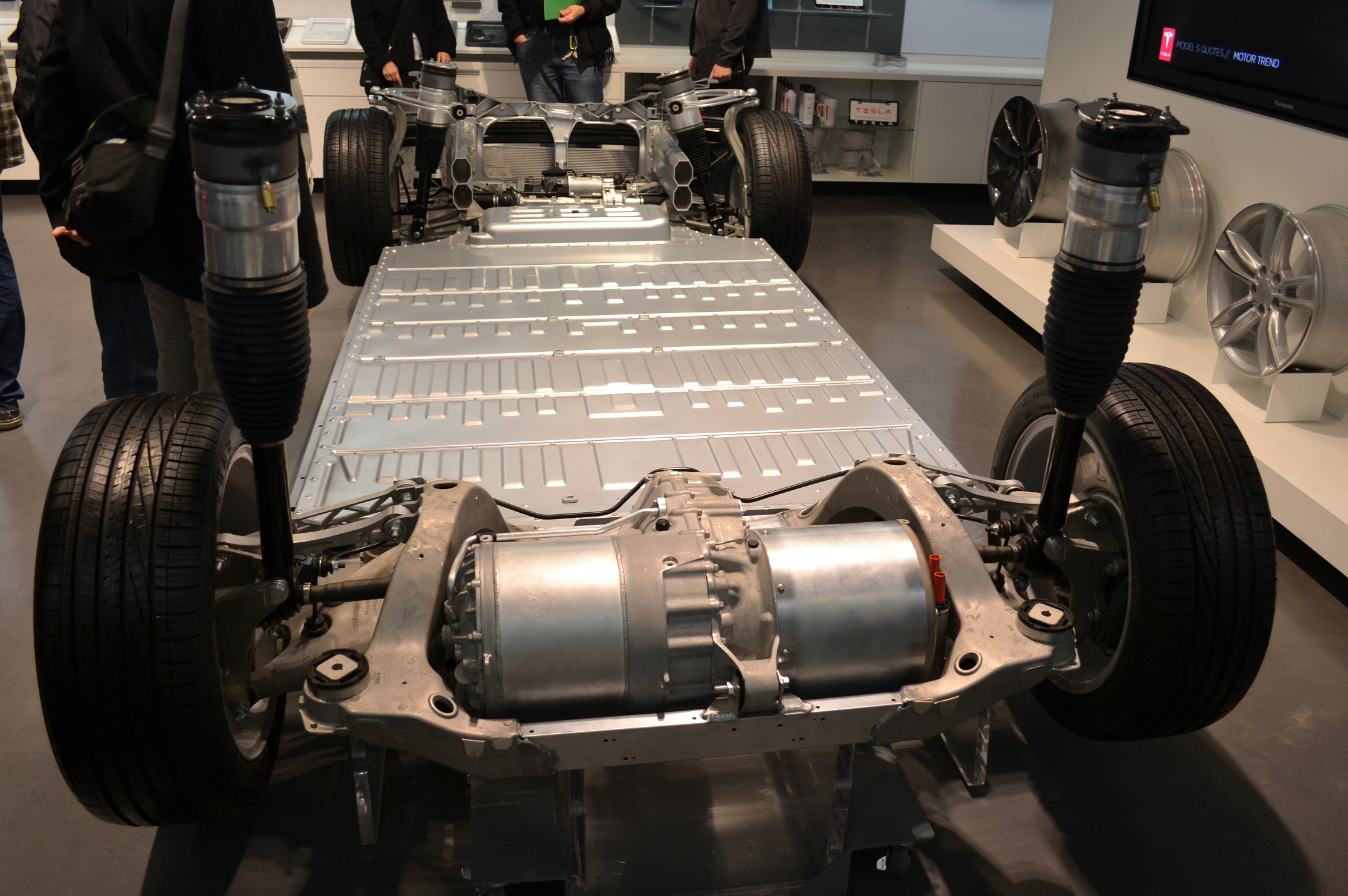

Photo Credit: Oleg Alexandrov, CC BY-SA 3.0 <https://creativecommons.org/licenses/by-sa/3.0>, via Wikimedia Commons; https://commons.wikimedia.org/wiki/File:Tesla_Motors_Model_S_base.JPG

Bank of America financial analysts have just predicted that based on current and future sales predictions, as well as government mandates to reduce and/or possibly ban the sale of new fossil fueled fired vehicles, a worldwide EV battery shortage will occur as soon as 2025.

That's 4 years from now. What happens then? If you're driving a 10 year old EV and need to replace your battery (or buy/lease a new EV), how do you do it? Where will you go?

EVs have notoriously high upfront costs (which studies show are mitigated over an EV's lifetime after factoring in government tax incentives and general maintenance costs), but, there is this little Capitalism principal called the Law of Supply and Demand that is going to come into play here if this happens.

If people are being steered toward buying EVs because new fossil fueled cars are being frowned upon (if not banned), and, if the most important "part" of an EV (the battery!) is in short supply, guess what will happen?

The price of EVs will skyrocket.

Something to think about...your civil comments and thoughts may be made below.